
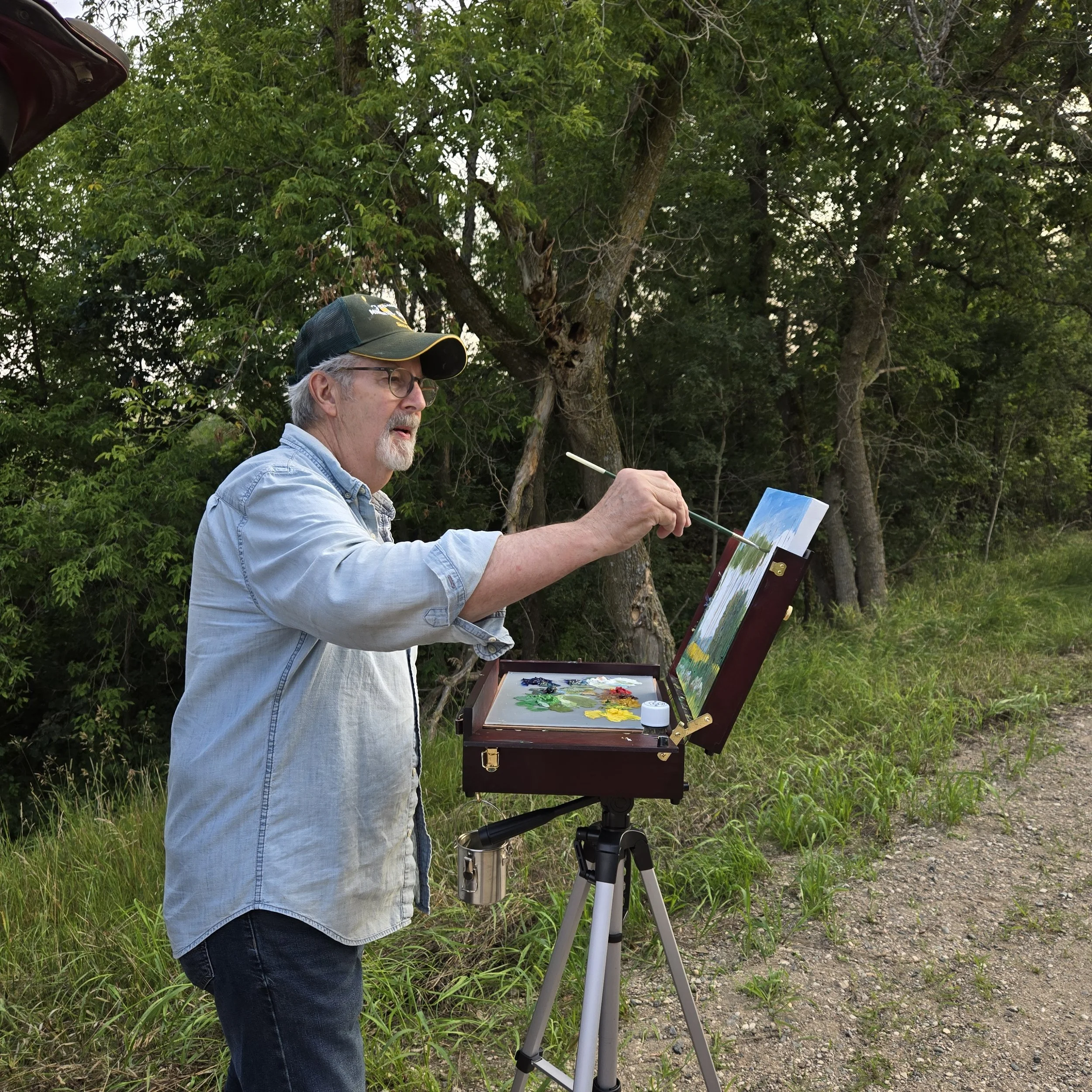
Why Plein Air Painting Matters: How Outdoor Work Strengthens Authentic Landscape Art
Serving as Chairman of Prairie Lakes En Plein Air has reinforced something I have long believed: nothing accelerates growth as a landscape painter like working outdoors.
When you paint en plein air, the environment does not wait for you. The sun shifts. Clouds roll in. Wind changes your composition. The light that defined your first impression disappears in minutes. You are forced to simplify, decide, and trust your instincts.
This pressure sharpens the eye.
Working outdoors strengthens essential skills — simplifying complex scenes, mixing accurate color efficiently, and making confident decisions under time constraints. The urgency often leads to fresher brushwork and a sense of immediacy that brings a painting to life.
Painting Outdoors Builds Technical Discipline
Often described as “painting bootcamp,” plein air work demands clarity. You cannot overwork a surface when the light is changing every ten minutes. You cannot hesitate endlessly over a color mixture when the temperature of the scene is shifting before your eyes.
The landscape insists on economy.
Over time, that discipline carries into the studio. Larger works benefit from stronger initial decisions. Compositions become clearer. Color relationships feel more authentic because they were first observed in real conditions.
These lessons do not disappear when you return indoors — they become foundational.
Immersion in Place Creates Authentic Atmosphere
Technique is only part of the story.
Painting outdoors builds intimacy with place.
When I paint in Minnesota’s lakes region — or in protected wild landscapes across the country — I am not merely observing a scene. I am immersed in it. The temperature, humidity, scent of pine, sound of wind through grasses — all of it informs the final work, even when the finished painting is completed later in the studio.
That direct experience gives the work authenticity.
For collectors and designers who value biophilic design — bringing the psychological and physiological benefits of nature into interior spaces — this lived connection to the landscape matters. The atmosphere within the painting begins outdoors.
Prairie Lakes En Plein Air, now the third largest plein air competition in Minnesota, continues to grow because artists are drawn to this challenge and camaraderie — and because the results show in the work.
A Personal Reflection
Early in my career, my work was more representational and controlled. Over time — especially through sustained outdoor painting — my approach shifted. I became more responsive, more willing to trust broken color, rhythm, and instinct. What I now describe as meditative impressionism emerged not from comfort, but from challenge.
Working outdoors reshaped how I see.
It strengthened my confidence in simplifying complexity. It deepened my connection to wild places. And it continues to influence the larger studio paintings collectors experience today.
The place is not imagined. It is known.
Wind, shifting light, temperature — all of it leaves a trace. That trace carries forward into the studio, shaping larger canvases with greater clarity and presence.
For Collectors and Designers
For collectors who value atmosphere rooted in lived experience, the discipline of painting outdoors matters. It is part of what gives a landscape its quiet authority within a space.
View Paintings Designed to Define a Space
For interior designers seeking large-scale landscape works that introduce biophilic warmth, depth, and natural rhythm into distinctive residential or corporate environments: